No forced dispatch
The carrier reviews and approves a load before it is booked.
Straightforward information for owner operators, new authorities, and small fleets comparing dispatch companies in the United States.
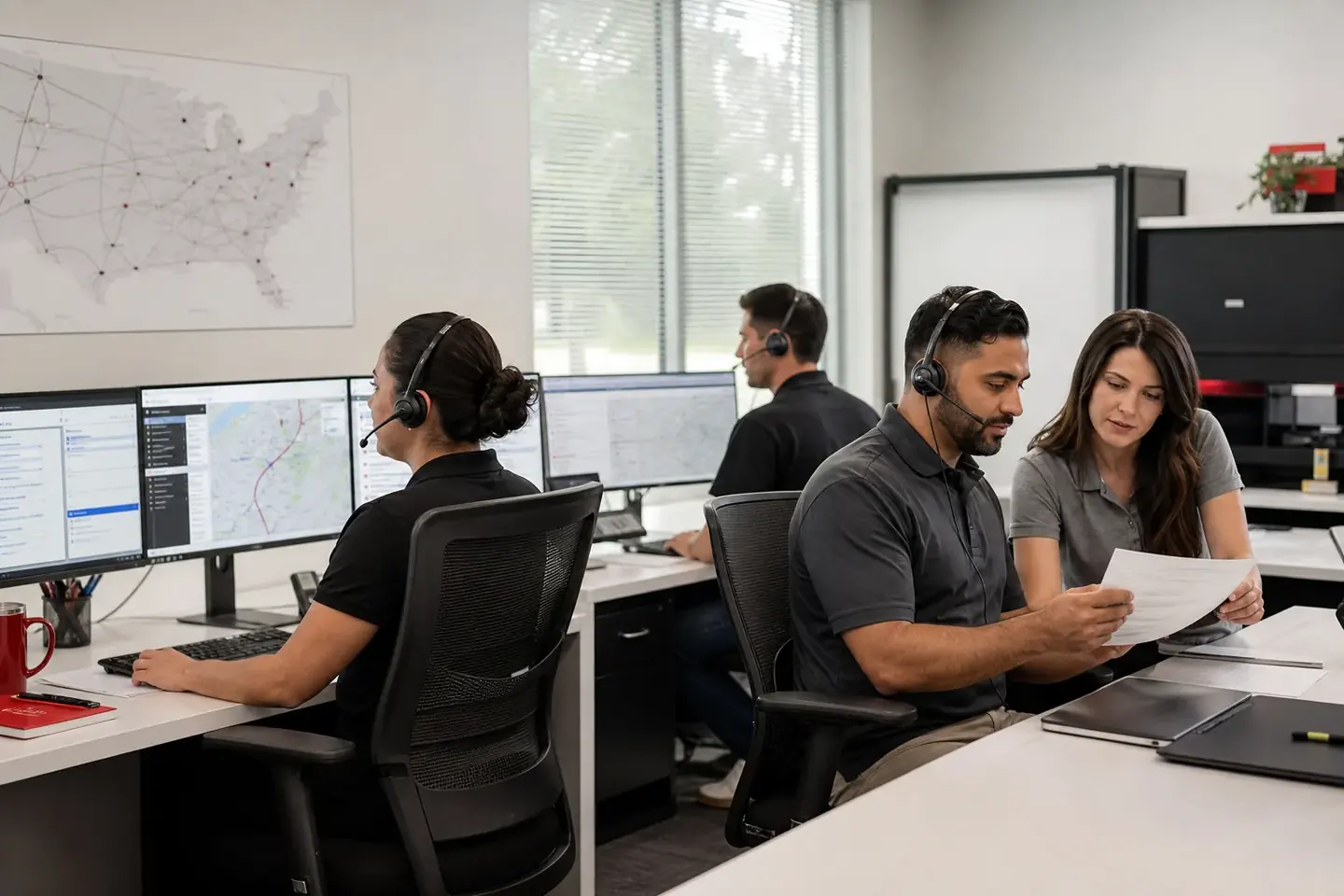
A truck dispatch company helps motor carriers search for freight, communicate with brokers, negotiate rates, confirm pickup and delivery details, plan around lanes, and organize load paperwork. The carrier keeps authority over the truck and approves each load.
No. Best Truck Dispatch follows a no-forced-dispatch approach. You decide whether a load fits your rate target, equipment, schedule, preferred lanes, and home-time goals before it is booked.
We support dry vans, reefers, flatbeds, step decks, and power-only tractors for owner operators and small fleets. Each equipment type receives a different freight-search and broker-communication approach.
Best Truck Dispatch remotely supports carriers operating across the continental United States. We help plan regional and over-the-road freight around the carrier's authority, equipment, current location, and lane preferences.
Pricing depends on equipment, fleet size, service scope, and paperwork needs. We explain the applicable fee before onboarding. Contact the team for a quote based on your operation rather than a generic estimate.
Common onboarding documents include motor carrier authority, certificate of insurance, W-9, equipment and driver details, factoring notice when applicable, and a signed dispatch agreement. Exact requirements may vary by broker and operation.
Yes. New carriers can receive setup guidance, carrier-packet organization, dispatch-readiness support, and help understanding the information brokers commonly request. Freight availability still depends on broker rules and current market conditions.
Dispatchers use available freight sources, broker relationships, lane research, equipment requirements, and current truck location to identify options. They confirm the details and present suitable freight to the carrier for approval.
No responsible dispatcher can guarantee a specific rate or weekly revenue because freight markets, capacity, weather, equipment, location, and broker requirements change. Our role is to research, negotiate, communicate, and help carriers make informed decisions.
Yes. Service can include appointment confirmation, broker updates, check calls, rate-confirmation review, detention or issue communication, POD follow-up, and organizing documents for invoicing or factoring.
Yes. Truck dispatching is handled remotely by phone, email, digital documents, and messaging. A carrier does not need to visit an office to receive nationwide dispatch support.
Onboarding can begin after you submit your company, authority, insurance, equipment, lane, and contact information. Timing depends on document completeness and the service agreement review.
A dispatcher does not need to be physically near the truck. Remote dispatch service can support carriers across the continental United States through phone, email, digital documents, tracking platforms, and messaging. Equipment knowledge, communication, and workflow matter more than office distance.
A freight broker arranges transportation between a shipper and an authorized motor carrier. A dispatcher works on behalf of the carrier to help search freight, communicate, organize details, and support the carrier's workflow. Best Truck Dispatch is a dispatch service and does not represent itself as the shipper's broker.
Rate discussions consider equipment, lane, mileage, deadhead, timing, commodity, weight, appointments, loading requirements, destination, and current capacity. A dispatcher can make a supported counteroffer, but no specific rate or outcome can be guaranteed.
Reefer dispatch requires attention to temperature settings, pre-cooling or washout requirements, product condition, appointment timing, lumper details, detention, continuous operation, and any special instructions documented by the broker or shipper.
Open-deck freight requires accurate commodity dimensions, weight, loading method, securement expectations, tarping, edge protection, permits when applicable, and confirmation that the truck and trailer can legally and safely handle the load.
Share your company and authority status, equipment, current truck location, preferred lanes, home-time goals, typical deadhead tolerance, factoring information when applicable, and the specific dispatch or paperwork support you need.
The carrier reviews and approves a load before it is booked.
The written load agreement showing rate, lane, parties, and important terms.
Miles driven without paying freight before pickup or after delivery.
Compensation that may apply when loading or unloading exceeds agreed free time.
Authority, insurance, tax, equipment, contact, and payment documents used for broker setup.
Proof of delivery signed or documented after freight reaches the receiving location.
Best Truck Dispatch supports owner operators and small fleets with freight search, broker communication, rate discussions, pickup and delivery details, lane planning, carrier setup, rate confirmations, POD follow-up, and organized paperwork. Service is remote across the continental United States, and the carrier keeps final control over every load decision.
Best Truck Dispatch works remotely with owner operators and small fleets running regional and over-the-road freight. Lane planning begins with your current market, equipment, reload potential, deadhead tolerance, and home-time goals.
Discuss Your LanesCalifornia, Arizona, Nevada, Oregon, Washington
Texas, Florida, Georgia, Tennessee, Carolinas
Illinois, Ohio, Indiana, Michigan, Missouri
Pennsylvania, New Jersey, New York, New England